Showing posts with label installation. Show all posts

Friday, April 10, 2015

crossword


Thought behind the thought
Crosswords are fun! But at times, they really try your patience. Words just don't seem to agree with each other. They refuse to sit next to each other, or if they fit in, push others out of their way, leaving empty spots. But one just has to persevere. Finally, there comes a word that sets things right. And the whole puzzle just falls in place at once.
Just like life .....

About architecture and Design
Crossword lovers would surely like to see this happening in their neighbourhood!


With a large crossword puzzle installed on the side of the structure, this building in Ukraine has an address that no one can get wrong. Created as a part of a city-wide art installation, clues to the puzzle are scattered all throughout Lvov. You'll have to find them one by one if you're hoping to solve the giant crossword. Designed as a way to encourage people to visit the town's interesting locations, they're distributed among popular city landmarks, like theaters, monuments and museums.


How do you know if you got the answers right? You'll have to wait till nighttime, when the combination of the installed lighting system and the fluorescent paint fills up all the boxes with the correct answers. Measuring 100 feet in height, it is truly a sight to behold, especially when set against the backdrop of the evening skies.

Credit and source of information
http://www.coolthings.com/ukraine-building-gets-a-100-foot-crossword-puzzle-that-solves-itself/

Wednesday, March 18, 2015

value


Thought behind the Thought

What does 'value' mean? We are constantly judging our worth by the impact we make on people's lives with our presence. Whether we are the center of attraction in a group, whether we win a debate, whether people notice us and our work. But that is only half the story!
A person's real value is understood when he/she is absent from the scene. If someone remembers you for your work, if someone pauses for a moment and thinks about you, if someone feels that their day would have been better had you been a part of it ..... that will tell you how valuable your 'being you' is! 
Presence can create an impact, absence creates value!

About the Art 
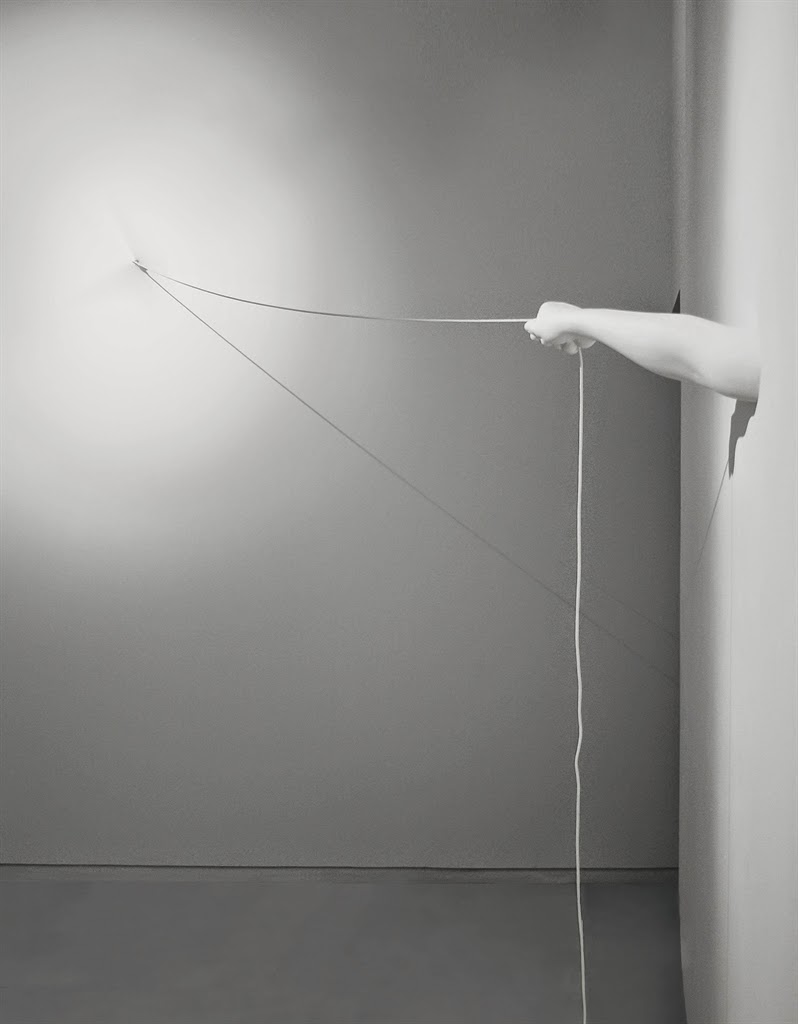
A fascinating way to express meaning in art is to convey what is 'not there' through what is 'there', right in front of your eyes. Expressing the 'unseen' through the obvious!, like words conveying a deeper meaning in poetry. Like the sculptures below, giving you a hint of what is actually absent from the visual frame!


The Sculpture showing  the artist, with his head tucked into the wall, it's presence highlighted by it's obvious absence!

The hand fully expresses the person, and the action that is actually absent from the scene.


A very effective representation of the force of 'Gravity' that cannot be seen, but is forever present.


"Kaayam", the sculptural 'skins' shed off artistically on the walls. This installation evokes and emphasizes the sense of the body that is actually absent from the sculpture.

A very dynamic sculpture, where the 'angel' emerges from a block of stone and merges into nothingness, by evaporation. An angel that was absent, expressed itself and vanished again!

Alwar Balasubramanium, the creator of these works, is a sculptor, painter, printmaker, and installation artist, currently based in Bangalore, India. His work, which focuses on the body and its material relationship to the world, has been the subject of international acclaim, and has been featured in museums and exhibitions worldwide.


Alwar Balasubramaniam's sculpture plays with time, shape, shadow, perspective: four tricky sensations that can reveal — or conceal — what's really out there.

Do watch the TED talk below fro a glimpse into his mind and thought process.

https://www.ted.com/talks/alwar_balasubramaniam_sculpture_of_substance_and_absence?language=en#t-990790

Alwar Balasubramaniam's work aches to express the overlooked, the invisible, the inexpressible. Quiet white sculptural forms, hung on a wall, unlock philosophical questions as one watches the light pass over them. What is their form, and what is their shadow? What are those mysterious white hands reaching for, around the corner and through the wall?Trained in painting and printmaking, Balasubramaniam has been experimenting with a range of materials (fiberglass, wax, gold) to create sculptural works that bring forth his ideas and his search process. His work is often very tactile, very physical, but it symbolizes an exploration of big questions:what defines the self? what confines us? how do light and shadow shape our view of the world?

“Mr. Balasubramaniam, self-taught as a sculptor, is young, savvy and in the middle of a spurt of growth. It could take him anywhere, but there’s already a lot here.” — Holland Cotter, New York Times(www.ted.com)

Credit and Source of information
www.ted.com, http://ted.tumblr.com/post/80063091142/why-does-alwar-balasubramaniam-create-sculptures
http://en.wikipedia.org/wiki/A._Balasubramaniam#Work
http://www.sculpture.org/documents/scmag08/dec_08/balasub/balasub.shtml
http://artist.christies.com/A-Balasubramaniam-10592-bio.aspx
http://artasiapacific.com/Magazine/WebExclusives/AlwarBalasubramaniamAlwarBalasubramaniam

Wednesday, March 11, 2015

butterflies


Thought behind the thought
There is something very fascinating about butterflies. The delicate beauty and the lively, colourful movement are just a part of the story. The most important thing is probably the fact that butterflies didn't start out being as beautiful as they are. All of them were voracious caterpillars and ugly cocoons before they finally emerged as beautiful creatures!
And probably patience is the key to this transformation. Things will happen at their own pace. And if you have it in you, nothing can stop you from emerging out of your cocoon. One only needs to have self belief and loads of patience!

About the Art

Installations with butterflies by Paul Villinski


Paul Villinski has created studio and large-scale artworks for more than three decades.His work has been included in numerous exhibitions nationally. Villinski’s work is widely collected, including major public works created by commission.

His studio is currently completing “SkyCycles,” three full-scale “flying bicycles” to be installed at “Ocean Breeze,” a new Parks and Recreation Track and Field facility, through the New York City Percent for Art Program. The City of New Haven Percent for Art Program commissioned “Dreamdesk,” a flying school desk with 18’ wingspan which was installed at the entrance to the East Rock Magnet School in 2014.
A pilot of sailplanes, paragliders and single-engine airplanes, metaphors of flight and soaring often appear in his work. With a lifelong concern for environmental issues, his work frequently re-purposes discarded materials, effecting surprising and poetic transformations.
(Text Source: www.paulvillinski.com)


"I am drawn to humble, yet evocative materials; in this case, crushed beer cans from the streets of New York - every one of them once raised to someone’s lips. My process of “recycling” them into images of butterflies is a quiet physical meditation, a yoga of tin snips and files and fingers. As the butterflies alight on the walls of my studio, they lead into an exploration of formal, painterly issues. Often, they want to gather into a certain shape, or fly off on a particular tangent, and I let them. They function both as marks in these abstract, three-dimensional “paintings,” and as actors in curious narratives. Some pieces develop a quirky, magic-realist quality, as if a strange child has trained the insects to perform some ritual dance we are not usually privy to. Finally, the butterflies operate symbolically, and I try to develop a conceptual unity between materials, process, and imagery: metamorphosing littered beer cans into flocks of butterflies mirrors the act of transformation and rebirth that butterflies symbolize across all cultures.

Butterflies seem impossible. How can these ridiculously delicate creatures, apparently blown about by the merest breath of wind, actually fly many thousands of miles to migrate? How is it that an innate, intergenerational GPS guides them year after year to the same tree? Are we more like them than we suspect, or could we be?"
(Text Source: www.paulvillinski.com)


Credit and source of information
http://www.paulvillinski.com/work/archive.html

Saturday, March 7, 2015

time


Thought behind the Thought
That time flies, is a fact well known and well accepted by all. And the right time flies even more quickly. Before you know it, the right moment has moved ahead and you are left with your dreams and aspirations, trying desperately to catch up with it.
It is a chase as exhausting, as it is frustating! How does one know that the time is 'right'. And having realised that it has left, how does one reconcile to the fact and go about setting things right?

About the Art
The concept of time has inspired many artists to create innovative art, whether it is painting, or sculpture, or installations. Here is how artists have chosen to represent the concept, each unique and interesting in its own way.

Time Flies 2012 by Ursula Gerber Senger

(Selected work for the 7th From Lausanne to Beijing "International Fiber Art Exhibition Nantong City, Jiang Su Province, China "1895" Cultural and Creative Industrial Park)

“Time flies” stands for the rapid changes being experienced in today’s world. In my work I am depicting the speed and the pace of today’s world.


Our workflow and mobility is becoming more rapid and faster, human relationships are becoming more challenging and more demanding and social bonding more fragile. The flood of information we are receiving today causes a fragile surface like walking on thin ice, on which we struggle and grasp for orientation. (Ursula Gerber Senger)

Source: 
http://www.ursula-gerber.ch/time-flies3-de.html


As time Flies by James L.Hayes

Commissioned by Cork City Council in 2008 this large- scale work was created in consultation with Michael Punch & Partners Consulting Engineers and was fabricated by A&A Engineering in Dublin.

The concept of this public work is underpinned by an ongoing concern with the ‘everyday object’. Conceptually the work also corresponds to the artist’s continued and ongoing desire to transform the most humble and ephemeral of objects, e.g. a childlike kite, into celebratory and permanent relics. A permanent fixture on the North Cork city skyline, this work aims to embody and explore a sense of optimism, social confidence and also signifies and connotes aspects of expression, play, flight and departure. (James L.Hayes)


Source: 


Time Flies By by How & Nosm. Spray Paint on DC 3 for The Boneyard Project


The Bone Yard Project revives disused airplanes from America’s military history through the creative intervention of contemporary artists, taking entire airplanes and their elements out of aeronautic resting spots in the desert, known as boneyards, and putting them into the hands of artists.

How and Nosm (Raoul and Davide Perre), the creators of the above art,  are identical twin brothers known for their large scale graffiti based murals that adorn city walls around the world. The red, black, and white-based imagery is instantly recognizable and commands attention through the impressive size and the intricate detail.

Time flies by sand artist Joe Castillo
Artist, author, pastor and entrepreneur, Joe Castillo grew up surrounded by art and the cosmopolitan culture of an international city. He has continued to nurture his artistic roots. He has also developed a number of “Live Art” presentations that use intricately crafted illustrations to teach Biblical truths as they unfold. His latest artistic venture called “Sand Art”, is a live-art presentation performed to music and projected for a stunning visual effect. Joe is an artist, author and storyteller with a passion for promoting the visual arts as a way of touching the heart.

Source:

Saturday, January 31, 2015

the cloud


Thought behind the Thought
Clouds are fascinating. Dense and transperent at the same time, they float about the sky forming an everchanging sculpture bathed in sunlight during the day, and a beautiful veil hiding the moon and the stars at night.
There is so much one can learn from clouds! They are very much a part of the cycle of life, absorbing life in the form of water when it rises up to meet them, and also giving it away to the earth when its time. Hold what you can, till you must. Give it away when the time is right, and move on just like the cloud. Travel light! And stay miles above the earth!!

About the Art
To recreate the cloud sculptures of the skies is definitely not an easy job! But Berndnaut Smilde does just that. He creates clouds in the interior spaces using water vapour and his artistic sensitivity, and creates ephemeral though beautiful art, that he captures in equally beautiful photographs!


It is indeed interesting to see how he creates art, literally out of thin air!


Berndnaut Smilde’s work consists of installations, sculptures and photos. Using his daily surroundings and spaces as motives, Smilde is interested in the temporal nature of construction and deconstruction. His work refers to both the physical state of a building as well as a moment of revelation that depicts either hope or fragility. Smilde analyses spaces and their appearance and takes them apart to investigate their unique details and features. His artistic point of view often centers on duality. His works question: inside and outside, temporality, size, the function of materials and architectural elements.

Berndnaut Smilde (b.1978, Groningen, Netherlands) lives and works in Amsterdam. He has exhibited across The Netherlands and also in Toronto, Taipei, Istanbul, Dublin, Paris, London and San Francisco. In 2013, he opened his first large scale solo exhibition in the US at Land of Tomorrow in Louisville, Kentucky, and guest curated a show at the Bonnefantenmuseum in Maastricht. His Nimbus series was recognised by TIME Magazine as one of the "Top Ten Inventions of 2012". He was a resident artist at the Irish Museum of Modern Art, Dublin in 2008. Smilde received his BA in 2001 from the Minerva Academy and his MA in 2005 from the Frank Mohr Institute, both in The Netherlands.


Source and Credits for information


Sunday, January 25, 2015

sunflowers


Thought behind the thought: 

Nature has its own operating system. Some unknown programmer has developed it millions of years ago and everything manages to fall in with the master plan without fail. Driving down to the rural outskirts of Pune we came across one such happy, bubbly Sunflower field. How orderly were the flowers? Each soaking its own share of the sun. Not greedy, not lazy not one of them was complacent. All of them moved in tandem in the set path as if the drill had been taught to them ages back. The Sun was the master and not one flower dared to look away. Nature amazes us, inspires us and most definite teaches us. Are we really as observant as we should be?


About the Art: 

Biomimicry is an approach to innovation and design that seeks sustainable solutions to human challenges and problems by emulating nature's patterns and strategies that are time tested. Biomimicry uses either the form or the function of a natural object or both and studies its workings. Based upon which, a solution can be found for bettering human existence in a sustainable way. Sunflowers - An Electric Garden in Mueller Village, Austin Texas, contains fifteen flower-shaped photovoltaic solar panels that are modelled on the form and workings of the Sunflowers.


According to the designers, public art team Harries/Heder, the solar SunFlowers were meant to celebrate the message of ecological stewardship championed by the developers and the city of Austin. These panels collect the sun's energy during the day to power the installation's complex series of blue LED lights which are lit up at night. Not only does it make the Mueller Village energy efficient it actually has been returning electricity to the city's power grid since monitoring began.


The landmarks website allows one to monitor the energy collection in real time. This is a public art installation and visitors can follow the cobalt blue trail on the property very easily as they stand out in the surrounding landscape. These industrial flowers are supposed to represent the devotion of Texas City to energy conservation. So far the flowers have managed to produce 300,000 kilowatt hours of energy and the numbers are growing. This is worth 451024 miles of carbon emission from an average American car.


Credits:

Friday, January 16, 2015

utensils


Thought behind the thought

Are we just 'minds' or 'souls'? If yes, what is the role of our body in being the people we are? To hold and contain our 'selves' or more than that? Is it not exactly like a utensil which contains the food and helps it simmer and cook till it is ready to be served? It also gives temporary shape to the food, if has no shape of it's own!And at times, also becomes the platter on which it is served. Agreed that the food is more important, but hasn't the utensil played a big role in the way it has been cooked?
And if that is true, shouldn't we be treating our body with a little more respect? Removing the dents and polishing it once in a while if it goes lack lustre with age? Can we afford to ignore the utensil if we hope to cook great food?
And to take the analogy further, isn't our body a great instrument that helps hold and prepare the soul till it is offered to the Almighty?

Utensils are surely to be appreciated and glorified. A look at these installations created by contemporary Indian artist Subodh Gupta show you how! 


About the Art and the Artist
Subodh Gupta employs many of the original techniques of French conceptualist Marcel Duchamp by elevating the ready-made into an art object. He chooses signature objects of the Indian sub-continent and relocates them as art objects in monumental installations of stainless steel and tiffin-tins.


Gupta says he rarely uses people in his installations. "I've always been surrounded by people. But I play with objects. Very few people appear in my works," he says."I'm looking at surroundings. And I'm definitely looking at objects in a different way."


The Banyan tree installation, made out of clusters of steel utensils is titled 'Dada', the Hindi word for grandfather, or the patriarch of the family.The installation located on the lawn outside the Art gallery makes one see the real tress around in a totally different way, just like Gupta himself does, though his work.

Credits and Source of information:
http://www.bbc.com/news/world-asia-india-25874132
http://www.saatchigallery.com/artists/subodh_gupta.htm
http://www.zimbio.com/pictures/zRVGbbIIn3L/General+Views+Subodh+Gupta+Installation/3waPSmcH30X
http://www.hauserwirth.com/artists/11/subodh-gupta/images-clips/


Thursday, December 25, 2014

a pinch of salt


Thought behind the Thought


I wondered one day, as I heard a relative recount the loss of a dear one, what it means to love, lose and suffer! How does one go on living after having lost a person who was a major part of your life? 
How do you fill the hole in your heart? I guess, the human heart has a great capacity to restore itself. After all, doesn't it expand to accommodate a new person in your life? Maybe a friend, your spouse, kids?

The secret is to take both the situations in your stride and live life to the fullest. Happiness or sorrow, both feed your heart, only you have to take both with a pinch of salt!

This seemingly humble ingredient can raise the quality of life, both figuratively and literally. As demonstrated in this fantastic art created by salt artist Motoi Yamamoto in his 'Labyrinth' series.


About the artist:
Motoi Yamamoto is an internationally renowned artist, known for working with salt, often in the form of temporary, intricate, large-scale installations. Salt, a traditional symbol for purification and mourning in Japanese culture, is used in funeral rituals and by sumo wrestlers before matches. It is frequently placed in small piles at the entrance to restaurants and other businesses to ward off evil spirits and to attract benevolent ones. Motoi forged a connection to the substance while mourning the death of his sister, at the age of twenty-four, from brain cancer, and began to create art out of salt in an effort to preserve his memories of her. His art radiates an intense beauty and tranquility, but also conveys something ineffable, painful, and endless.

“Drawing a labyrinth with salt is like following a trace of my memory. Memories seem to change and vanish as time goes by; however, what I seek is to capture a frozen moment that cannot be attained through pictures or writings,” Motoi has said. “What I look for at the end of the act of drawing could be a feeling of touching a precious memory.”


source and credits for information and images:
http://www.motoi.biz/english/e_top/e_top.html
http://www.mintmuseum.org/art/exhibitions/detail/return-to-the-sea-saltworks-by-motoi-yamamoto